- This event has passed.
A Celebration of Colonial Maryland Building Lecture and Reception
This event is full and registration is closed.
Lecture: Building in Brick: Annapolis, the Eastern Shore, and the Making of Colonial Maryland
Join us for a lecture by the noted author and architectural historian Willie Graham who will speak about the nature of brick architecture in Maryland prior to the American Revolution. The Hammond-Harwood House was the last of the great houses built in this period and Graham will discuss how Annapolis, and particularly how the Hammond-Harwood House fits in that context of architectural design and production.
Reception to follow.
Exhibition: Framing and Finishing: Woodworking in the Colonial Age
Visit the exhibition of more than 50 user-made and commercially produced house building tools used by 18th century woodworkers. Tools for framing a house, along with those for finishing the interior–floors, doors, cornices, windows, shutters, and chair rails-are represented. British and American wood planes, measuring devices, knives and saws, braces, and other implements are each a piece of art, each used for a specific purpose. We acknowledge the skill and resourcefulness of these craftsmen and their part in building a new nation.
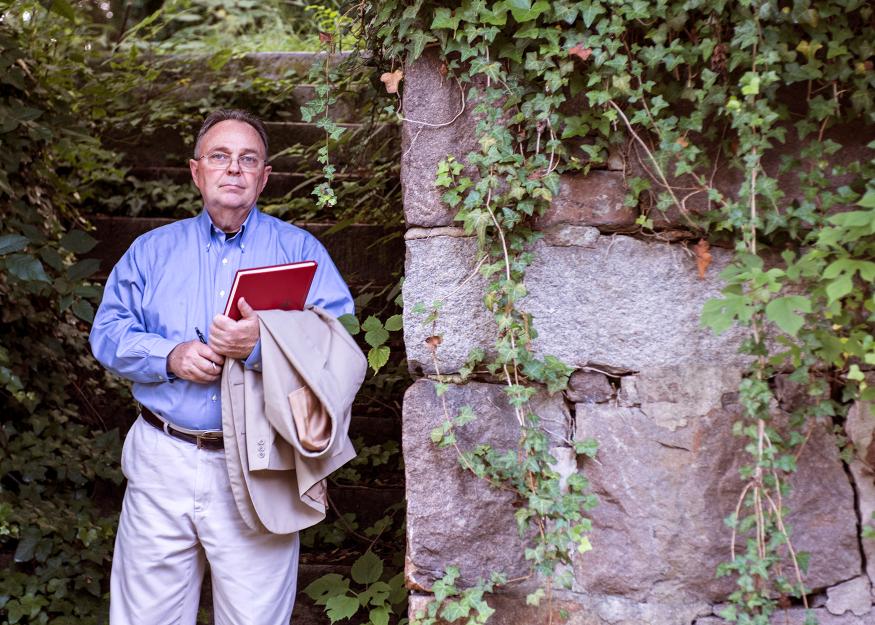
Speaker Profile: Willie Graham, Architectural Historian
Willie Graham’s career as an independent scholar and architectural historian is marked by a commitment to the study and preservation of traditional buildings. His 36-year tenure as the curator of architecture at the Colonial Williamsburg Foundation and his continued work includes research and projects extending along the East Coast of America, to the British Caribbean, Bermuda, and Great Britain.
Willie’s expertise in building analysis and recording has been integral to the restoration and reconstruction of numerous buildings and historic landscapes. He consults on some of the nation’s most important historic sites, including statehouses, established and new museums, and National Historic Landmarks. He has worked on a World Heritage site in Barbados, National Trust houses in Bermuda; Grade 1 listed buildings in England, Wales, and Ireland; and examined court theaters in Western and Central Europe. Willie helped establish new procedures for architectural investigations, convened a conference to develop protocols for tree-ring dating as applied to historic buildings; advocated for international standards for architectural paint analysis; and refined procedures for applying mortar and plaster analysis to building investigations.
As a published author, Willie’s essays in The Chesapeake House (ed. by Cary Carson and Carl R. Lounsbury) shed light on preindustrial building construction techniques and finishes, showcasing his scholarly acumen. His prowess as an architectural photographer complements his academic and practical skills, offering a visually rich perspective on architectural history.
His extensive experience in various facets of architectural history—from investigation, interpretation, reconstruction, and restoration, to project management and public programming—marks him as a leading practitioner in the field.
Willie Graham’s career embodies a rare blend of scholarly depth, practical expertise, and a visionary approach to architectural history, marking him as a significant figure in the preservation and understanding of our architectural heritage.