
I would never have considered this question before I moved to Annapolis from Texas. Where I’m from, we have a lot of state pride (who can forget the Alamo?), but I always yearned for a deeper knowledge of American Revolutionary history.
This curiosity has been invoked by the peculiar nature of Annapolis being a living historical town (i.e. there are nearly a dozen historic museums to tour), a daily reminder of what life may have been like 200 years ago. Walking the brick paths that were once shared with carriages, hearing stories from locals about the development of the city, and learning of the Revolutionary spirit that still exists in the very buildings that our Founding Fathers walked in – a willing ear cannot go deaf to the tales this town has to tell.
The fighting air that the Sons of Liberty breathed remains very much the same air we breathe today, no matter how different the fighting spirit may look. We can refer back to those memories as they are preserved not only in history books, but also in observing the symbolic characteristics of the first-hand writings, feelings, and possessions of the people who lived during these historic events. One of these items that I have grown particularly fond of is the Peggy Stewart Bowl.
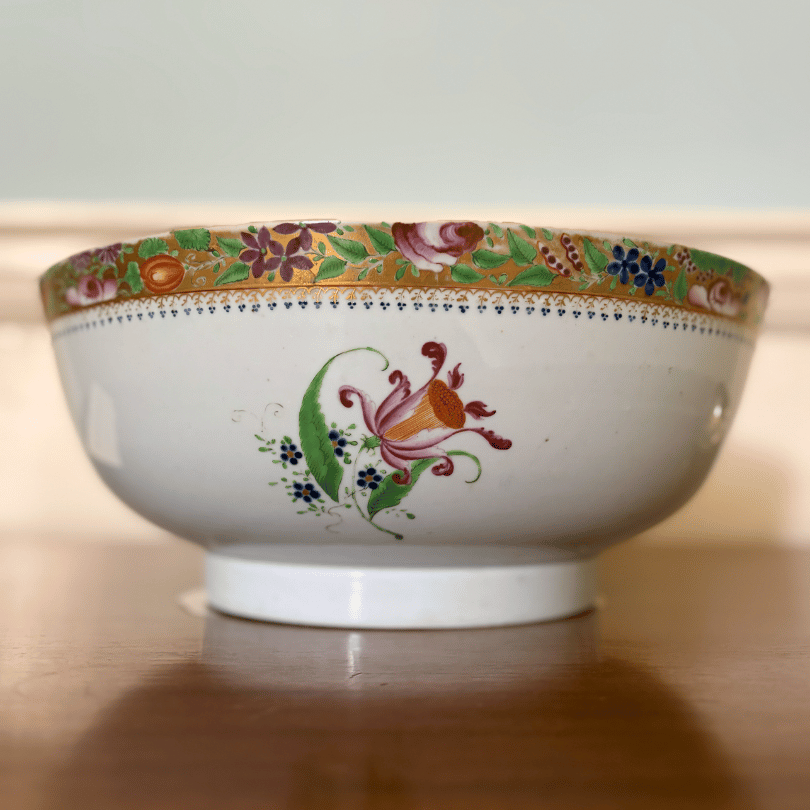
The origin of this bowl is part of one of the many events of the Revolutionary War, namely, in 1774 when Anthony Stewart was forced to burn his ship, the Peggy Stewart. Eight years prior, in 1765, the Tea Act was a decision enacted through which the English authorities placed a burden on all imported teas in the colonies. Annapolis merchant Thomas Williams, who represented another Annapolis family, smuggled tea on board Stewart’s ship, and when the ship’s captain Thomas Jackson was required to pay the tax enforced by the royalists, the local Sons of Liberty were outraged by the cooperation of Stewart and Jackson. The council of revolutionaries demanded that Stewart burn the ship, of which he eventually conceded.
The only item that remained after the ship was burned and sunk was a bowl. But what makes a bowl special?
It’s a bowl that symbolizes resilience in the face of fire, strength beyond the first movers of a cause. Of the many symbols used in the Revolutionary War, the burning of the Peggy Stewart was Annapolis’ version of the Boston Tea Party, and the bowl is a tangible thing we can see (and if you’re me, actually get to touch so we could move it into the new exhibition) that reminds us that this part of history is real and happened right here.
I am grateful to learn so much about the history of Annapolis as it is preserved in historic locations like where I work. I hope to continue to be inspired by the stories of how the preservation of a country’s founding spirit can be embodied through items like a bowl, burning ship or not.
Dominic Johnson
Hammond Harwood House Student Aide
Want to see the Peggy Stewart Bowl in person? Come see “Sons of Liberty: Patriots and Firebrands” on display at the Hammond-Harwood House September through December 2026, featuring portraits and objects from the lives of the real patriots that fought for American freedom here in Annapolis, Maryland. Learn more about the exhibition here.
