
What might Thanksgiving have looked like in the Annapolis home of Frances Loockerman?
On December 14, 1842, Marylanders were invited to observe a day of thanksgiving, praise, and prayer. Governor Francis Thomas had issued a proclamation encouraging citizens to give thanks for the blessings they enjoyed. Although Thanksgiving celebrations had long been associated with New England, the holiday was relatively new to Maryland, where its adoption reflected a growing national movement to establish this day as an annual observance.
At the Hammond-Harwood House in Annapolis, the occasion would have arrived during the residence of Frances Chase Loockerman, who had lived in the elegant Georgian mansion since 1811. Her father, Judge Jeremiah Townley Chase, had purchased the house for Frances and her husband, Richard Loockerman. By 1842, however, Richard had been dead for eight years, leaving Frances to manage the household amid considerable financial and personal difficulties.
Did Frances and her family observe Maryland’s newly proclaimed Thanksgiving? No surviving household record has yet established that they did. Nevertheless, the history of the family, the traditions of the period, and contemporary foodways offer intriguing possibilities.
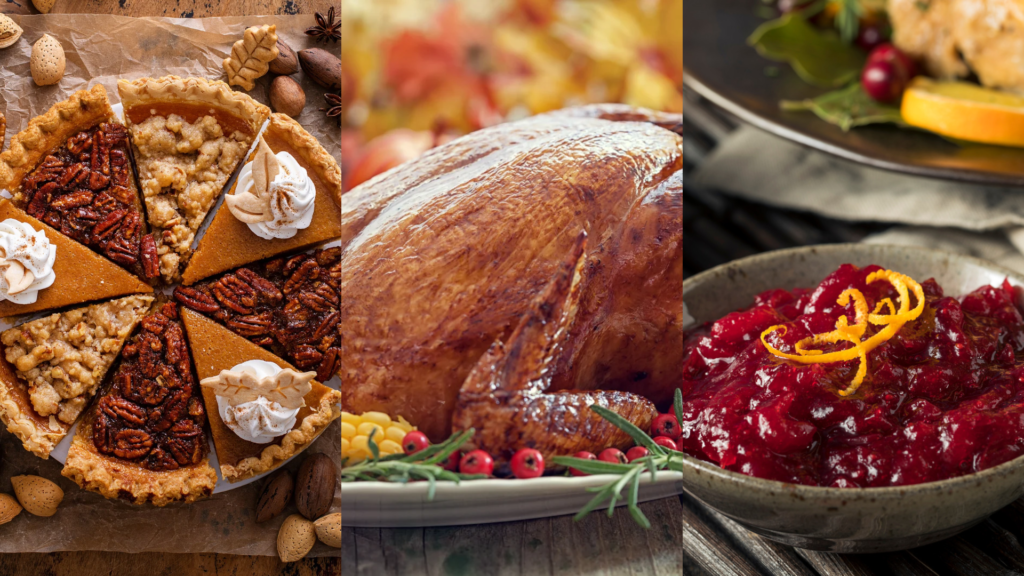
Thanksgiving Before Turkey and Pumpkin Pie
The Thanksgiving familiar to Americans today, complete with roast turkey, cranberry sauce, pumpkin pie, and family gatherings, was not yet a firmly established tradition in Maryland.
During the 1830s and early 1840s, the Baltimore Sun encouraged Maryland governors to embrace the New England holiday. Early appeals promoted such familiar Yankee treats as cider, doughnuts, and pumpkin pie. These culinary associations were not necessarily appealing to Marylanders who identified more closely with Southern traditions, such as oysters, crab, sweet potato pie, etc.
By 1842, the emphasis had shifted. Rather than presenting Thanksgiving as an occasion for feasting on New England specialties, supporters stressed its religious and patriotic significance. Governor Thomas’s proclamation reflected this approach, encouraging Marylanders to express gratitude for divine blessings.
For Frances Loockerman, whose family belonged to St. Anne’s Parish, the day might have involved religious observance, quiet reflection, and time spent with family. Whether it also included a special dinner remains unknown.
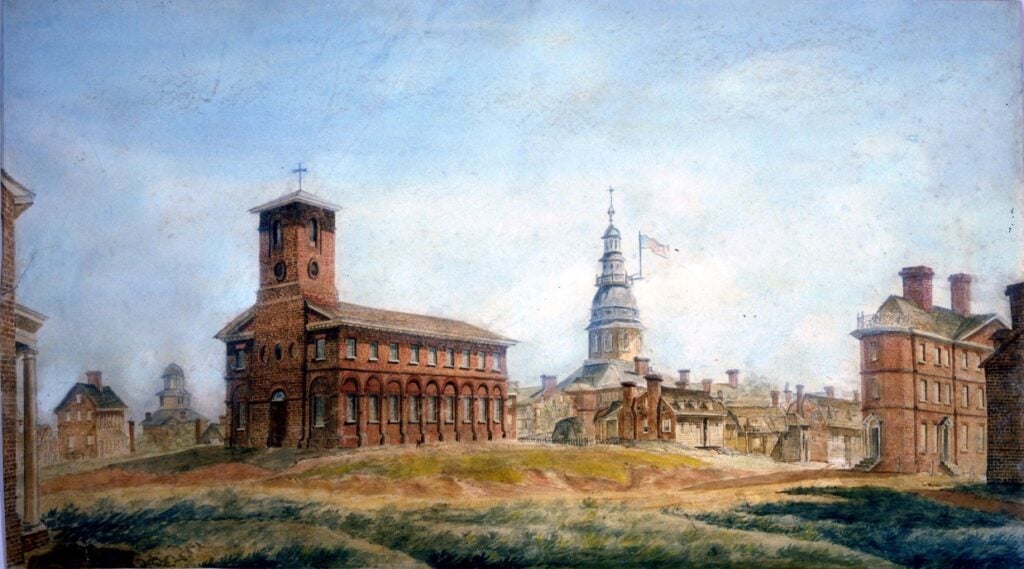
What Might Have Been Served?
If the Loockermans marked the occasion with a celebratory meal, their table probably would have reflected the Chesapeake food traditions they knew rather than a prescribed Thanksgiving menu.
Turkey was certainly available in nineteenth-century Maryland, but it was only one of many possibilities. Roast chicken, duck, goose, beef, mutton, and ham were familiar choices for substantial dinners. In the Chesapeake region, canvasback duck was particularly prized.
A meal might also have included seasonal vegetables, sweet potatoes, pickled vegetables, and fruit preserves. Cranberries were known well before Thanksgiving became a national holiday. Amelia Simmons’s American Cookery, published in 1796, included a recipe for cranberry sauce, demonstrating that the preparation was already part of American cuisine. Sweets offered another opportunity for variety. Mince pies, sweet potato pies, apple pies, pound cakes, and other sweet dishes were familiar to nineteenth- century Maryland households. A particularly appropriate local example is a pound cake recipe associated with Mrs. Chew of Annapolis, recorded in an account book dating to approximately 1814. Flavored with ingredients such as rosewater and brandy, it illustrates the rich baking traditions enjoyed by Maryland families.
These dishes are historically plausible possibilities, not a documented Loockerman Thanksgiving menu. Indeed, an 1842 dinner might have differed little from another special family meal served during the season. It must also be remembered that the Loockerman family represent a small segment of society with greater financial means than most Marylanders who would have dined on a much smaller budget.

Behind the Dining Room Door
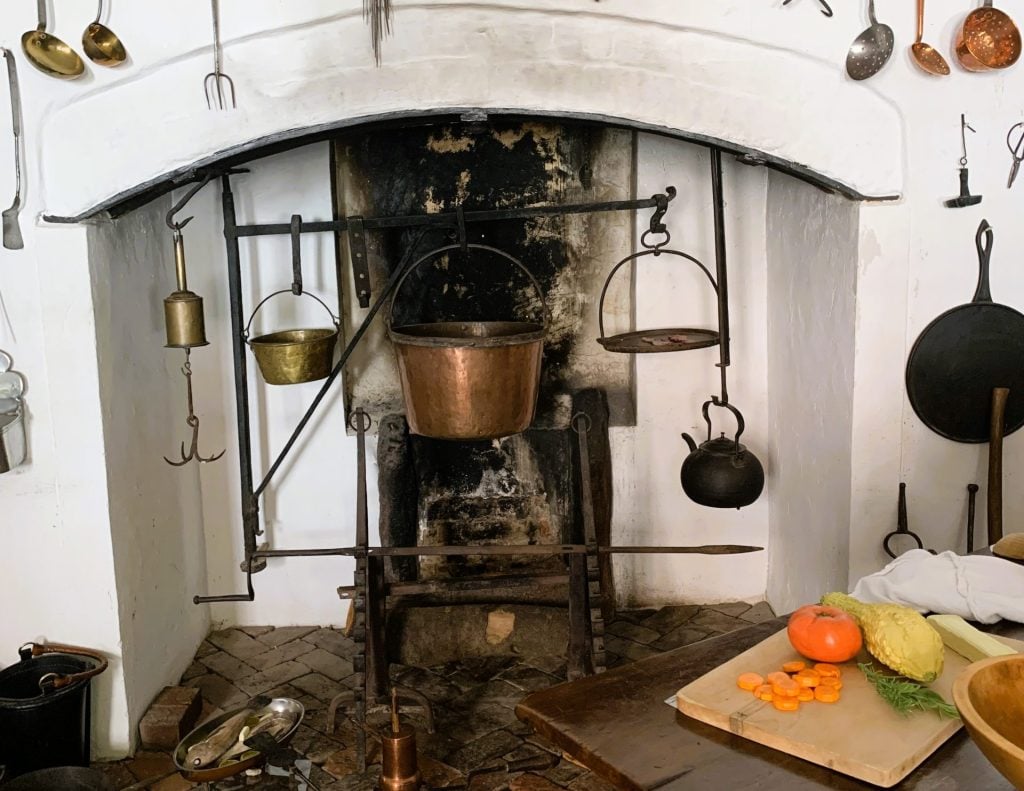
Any consideration of dining at Hammond-Harwood House must also acknowledge the people responsible for preparing and serving the food. The Loockerman household depended at various times on the labor of enslaved individuals. Museum research has identified several by name, including Mary and Matilda Matthews and a woman named Juliet. Their responsibilities included cooking, cleaning, tending the kitchen garden, and attending to the family’s daily needs. A particularly revealing letter written by Frances in March 1842 mentions that she kept two servants and that Juliet had traveled to Baltimore the previous August for her health and had not yet returned. The letter provides a rare glimpse into the household during the very year Maryland introduced its Thanksgiving observance.
We do not know who prepared meals in the house that December. Nevertheless, any special dinner would have required considerable labor, from tending fires and preparing ingredients to cooking, serving, and washing dishes. Recognizing this work allows us to tell a fuller story of life at Hammond-Harwood House.
From a Maryland Observance to an American Tradition
Maryland’s 1842 Thanksgiving was part of a much larger transformation in American culture. Sarah Josepha Hale, the influential editor of Godey’s Lady’s Book, spent decades advocating for a common national Thanksgiving. She believed the holiday could strengthen family bonds and foster a shared American identity.
In 1863, during the Civil War, Hale got her wish when President Abraham Lincoln proclaimed a national Thanksgiving observance for the last Thursday of November. Over the following decades, the holiday increasingly became associated with family reunions, abundant dinners, and the now-familiar foods of the Thanksgiving table, and, of course, football! For Frances Loockerman, Thanksgiving in 1842 would have represented something different: a relatively new Maryland observance centered on gratitude and religious reflection.
Although we may never know precisely how the Loockerman household spent December 14, 1842, the occasion provides a fascinating window into a period when Thanksgiving was still taking shape. It also reminds us that the holiday’s traditions developed gradually, shaped by regional customs, religious beliefs, changing family life, and socio-economic factors.
At Hammond-Harwood House, those intertwined histories remain part of the story of the home and everyone who lived and worked within its walls.
Article by Joyce M. White, author of Cooking Maryland’s Way: Voices of a Diverse Cuisine
