
The Hammond-Harwood House is happy to announce our upcoming exhibition “Sons of Liberty: Patriots and Firebrands.”
The 1765 Stamp Act catapulted the colonial crusade for independence from Great Britain. This act required the colonists to pay a tax, represented by a stamp on various forms of papers, documents, and playing cards. The stamp would be purchased from a Crown-appointed tax collector. The colonists considered the Stamp Act a violation of their rights as Englishmen. They refused to be taxed without their consent—consent that they claimed only the colonial legislatures could grant. The slogan “No Taxation Without Representation” was born.
Local protest groups from New England to North Carolina established Committees of Correspondence creating a loose underground coalition later known as the “Sons of Liberty.” In Annapolis, the Sons of Liberty included Charles Carroll of Carrollton, Judge Samuel Chase, Judge Jeremiah Townley Chase, William Paca, Matthias Hammond and his brother Rezin, Alexander Warfield, and others. The sentiments of the members within the group varied–some demanding more drastic action while others advocated a more moderate approach.
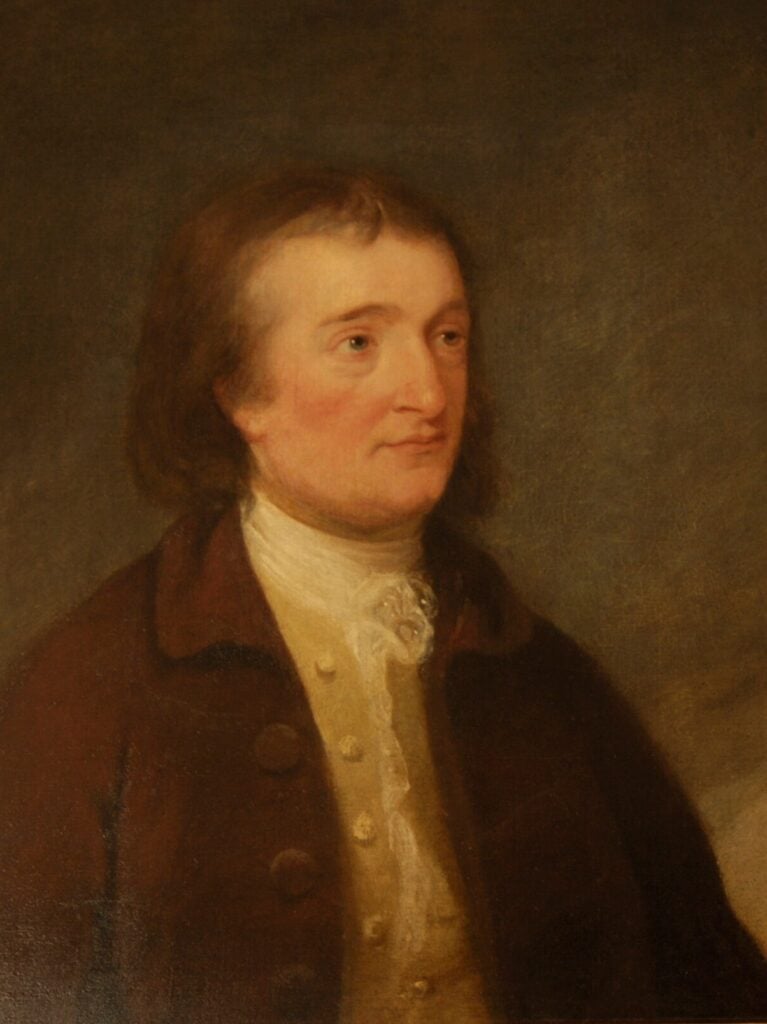
Judge Jeremiah Townley Chase (1748-1828)
Oil on Canvas
Maryland Historical Society Loan P68L
The Sons of Liberty organized protests, demonstrations, public readings, broadsides, newspaper articles, and violent acts including vandalism, hanging tax supporters in effigy, and threats of tarring and feathering. In 1774 the Annapolis Sons of Liberty were responsible for the burning of the Peggy Stewart, a brig carrying the “detestable weed” (tea) for which Anthony Stewart paid the tax and was in violation of a boycott on tea. The contributions of the Sons of Liberty launched the plans and put into action the revolt against British rule that soon became the American Revolutionary War.
The paintings, engravings, and objects in this exhibition tell the story of these early architects of the American Revolutionary War.
As a part of the mission of the Hammond-Harwood House, we offer rotating exhibitions on historical and cultural aspects of early American life. Through these shows, we are able to bring in artifacts, paintings, and perspectives that give new light to parts of history less explored. Tours of the house include a visit to current exhibitions.
